
Well, that was a Summer that surpassed last year’s efforts! In fact, it was probably too hot for some, and they say this could be the norm for some time to come. How the extended heatwave has affected nature will possibly reveal itself in the shorter term as Autumn establishes itself. While trees have been shedding their branches, and certain hedgerow fruits have been in short supply due to the dry weather, we will soon find out how it has affected the usually rich tapestry that Autumn provides. The garden certainly hasn’t been as bountiful as it normally is!
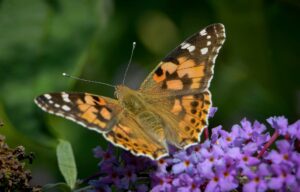 It has been a wonderful summer for butterflies with many species not normally seen being in such profusion in this country. A record-warm spring gave butterfly populations an early boost, allowing species like holly blues and small coppers to emerge in high numbers, and experts predicted and recorded a massive “painted lady summer” in Britain, with heatwaves and southerly winds pushing thousands of migratory orange butterflies north from Africa.
Blackberries arrived early this year and have been in abundance. I have been picking them from the garden since the end of July and have a nice quantity in the freezer! Blackberries are incorrectly named as they are not true berries. Instead, they are “aggregate fruits”, agglomerations of individual berries known as drupelets. There is traditionally a date after which the berries should not be picked, most commonly taken to be Michaelmas (29 September) but later in some areas, after which time the devil is said to spit or stamp (or worse) on the berries, rendering them unfit. It seems likely that this is a reference to the grey botrytis cinerea mould which envelops the fruits later in the season.
 Rose hips too don’t seem to have suffered to much from the dry weather and are a rich source of vitamin ‘C’. During the World War 2, when there were shortages of citrus fruits, the hips were collected and used to make ‘rose-hip syrup’ as an alternative. The seeds inside rose hips are covered in tiny bristles which can irritate the skin. They have been used by generations of kids as the main ingredient of itching powder. A potent reminder of my school days!
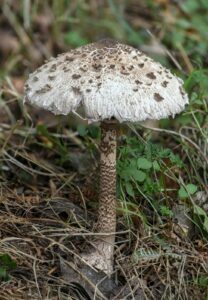
A damp Autumn brings on many wonderful fungal fruiting bodies, e.g. mushrooms and toadstools. Woodlands, both deciduous and coniferous, and old pastures are the best places to find fungi. However, they are everywhere and can be found on rotting wood and healthy trees, and in parks, gardens and on lawns for instance. One noticeable formation of toadstools is the fairy ring, formed by Marasmius oreades, although it can fruit from Spring through to Autumn. As the years pass the fungus spreads out further and further from the centre of the circle, and hence some examples can be proved to be decades old.
To quote Mr Keats, Autumn is the ‘season of mists and mellow fruitfulness’. It is also the season of bonfires so can I reiterate the annual message regarding hedgehogs. Please check your bonfire, before you light them, for these small creatures. As hedgehogs tend to hide in the centre and bottom two feet of the bonfire, check by gently lifting the bonfire section by section with a pole or broom. Never use a spade or fork as these can stab them. Using a torch will help and listen for a hissing sound, as this is the noise they make when disturbed.
That’s it….’til next time!
Geoff Pinn
Recent Comments